Years ago, before any of this, I worked as a makeup artist, including a few good years at Estée Lauder that I absolutely loved. People would sit down unsure, holding a product they'd half decided they didn't need, and the box would be promising them the world. None of that promise counted for much. What changed their mind was me putting it on their skin so they could see it and feel it for themselves, and just as much, whether they believed I knew what I was doing. If I seemed confident, if I seemed to know my craft, they trusted my word and they bought. If I didn't, no amount of product claims would close it.
That work reinforced something I've never really shaken, which is that people buy from people, but only from people they actually trust. They already knew the brand and they had usually heard good things about the product, yet they were rarely certain it would work for them. Closing that last gap took my knowledge and my skill, and once they trusted me, they were ready to buy whatever I recommended. I was the brand's salesperson standing on their shop floor, and Estée Lauder trusted me to be the person the customer believed.
Which is exactly what makes the creator world so interesting right now. Creators have spent years building audiences on trust, and that trust is precisely what turns them into salespeople. When someone who has earned that belief recommends a product, a piece of software, whatever it is, the audience takes their word for it, and the deal is more or less done. There’s very little selling left to do, because the trust did it already. And Meta has started building the tools to make the most of it.
What Meta just changed
In March, Meta started letting eligible creators add clickable shopping links directly inside their Reels. Up to 30 products in a single video, across both Instagram and Facebook, and on Instagram they can pull from a wide range of vendors rather than being boxed into one marketplace. As Meta’s Nicola Mendelsohn told an audience at Shoptalk, the era of link in bio is finally over.
Then in April, Meta opened the other side of it. Businesses in 22 countries will soon be able to provide their product catalogues to creators, so a brand lists its catalogue, a creator browses it, picks what fits their audience, tags it, and earns commission when someone buys.
Meta’s own words are the part worth sitting with. The company says these updates turn creator content into a new sales channel for businesses and a new opportunity for creators to monetise. That phrase is worth holding onto, because a sales channel is somewhere money actually changes hands rather than a place to build a bit of awareness and hope it trickles down later.
The honest version of what’s happening is that this is Meta’s answer to TikTok Shop, which made buying inside the app almost frictionless and quietly built one of the biggest retail engines on the internet. Meta watched that happen and wanted the same thing on its own turf.
YouTube is doing the same thing
YouTube is making the same move, and saying it just as plainly. Its CEO Neal Mohan opened 2026 by writing that creators are the new prime time, with more than 500,000 creators already in YouTube Shopping and one-tap buying on the way.
The reason is trust. In Google and Kantar’s research, 79% of Gen Z viewers in the US say they trust the recommendations of creators on YouTube.
So when I say creators are becoming the new salespeople, I’m not reaching for a headline. The platforms are saying it themselves, and they’re building the tills to match.
The numbers behind it
The creator economy is big and getting bigger. Grand View Research valued it at around $252 billion in 2025, and expects it to reach $310 billion in 2026 on its way to well over a trillion by the next decade.
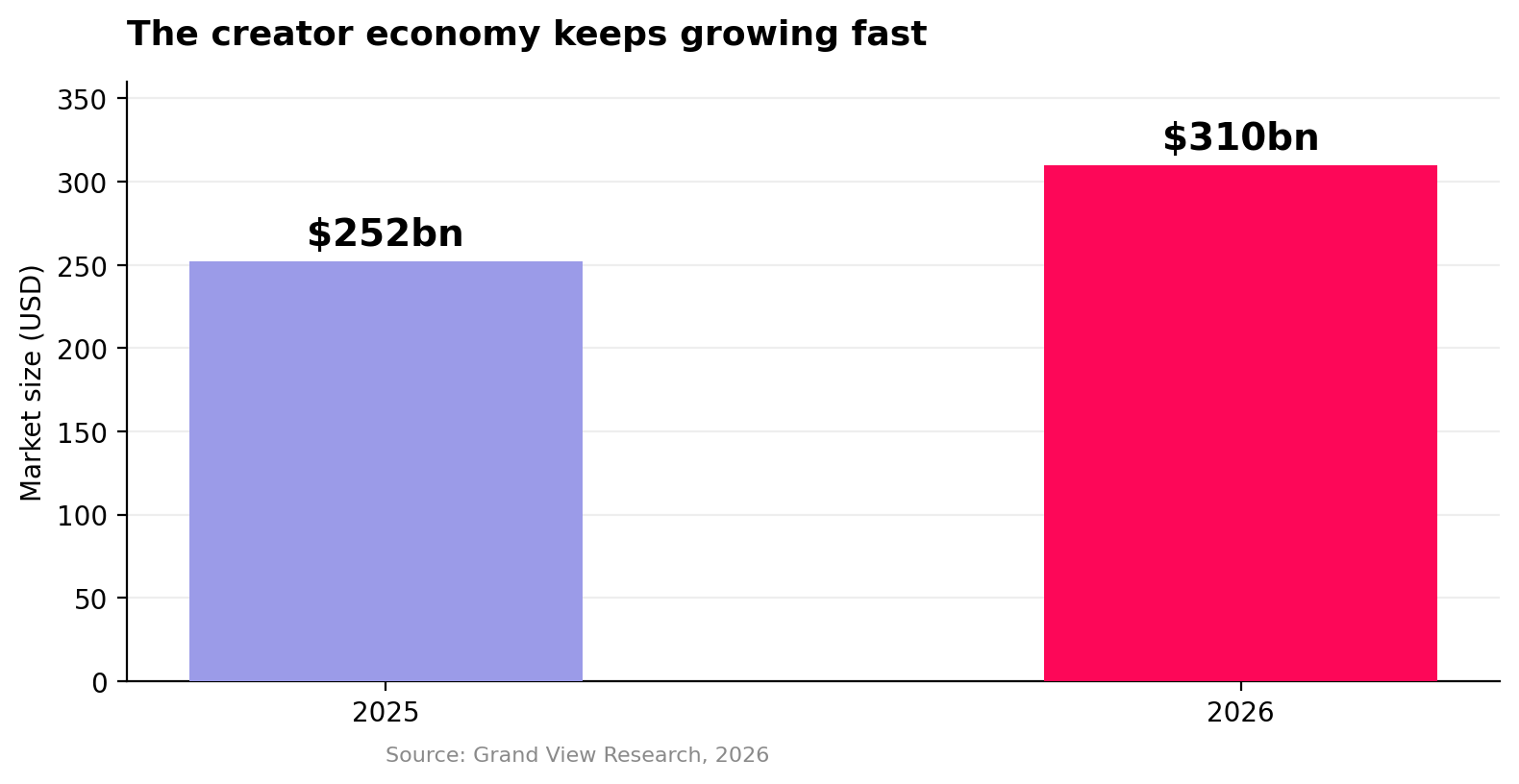
The creator economy keeps growing fast. Source: Grand View Research, 2026.
The number that should interest anyone running a budget is the return. The Influencer Marketing Hub benchmark puts the average at $5.78 back for every dollar spent on influencer marketing. And the buying itself is moving inside the feed. TikTok Shop alone reached $64.3 billion in global sales in 2025, almost double the year before.
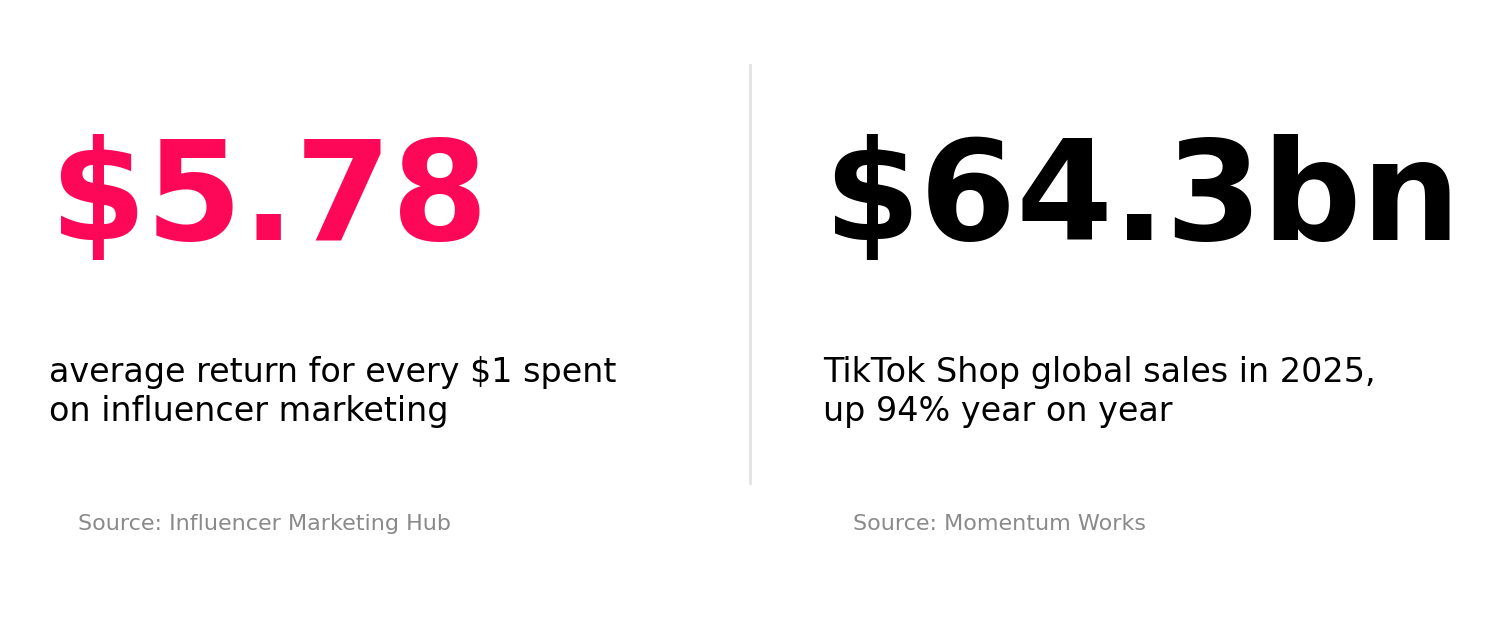
Influencer marketing pays back, and social commerce is scaling fast.
Those figures describe an economy where people earn a proper living by selling to audiences who trust them, which is a long way from influence measured in likes. And trust is exactly what the platforms are counting on.
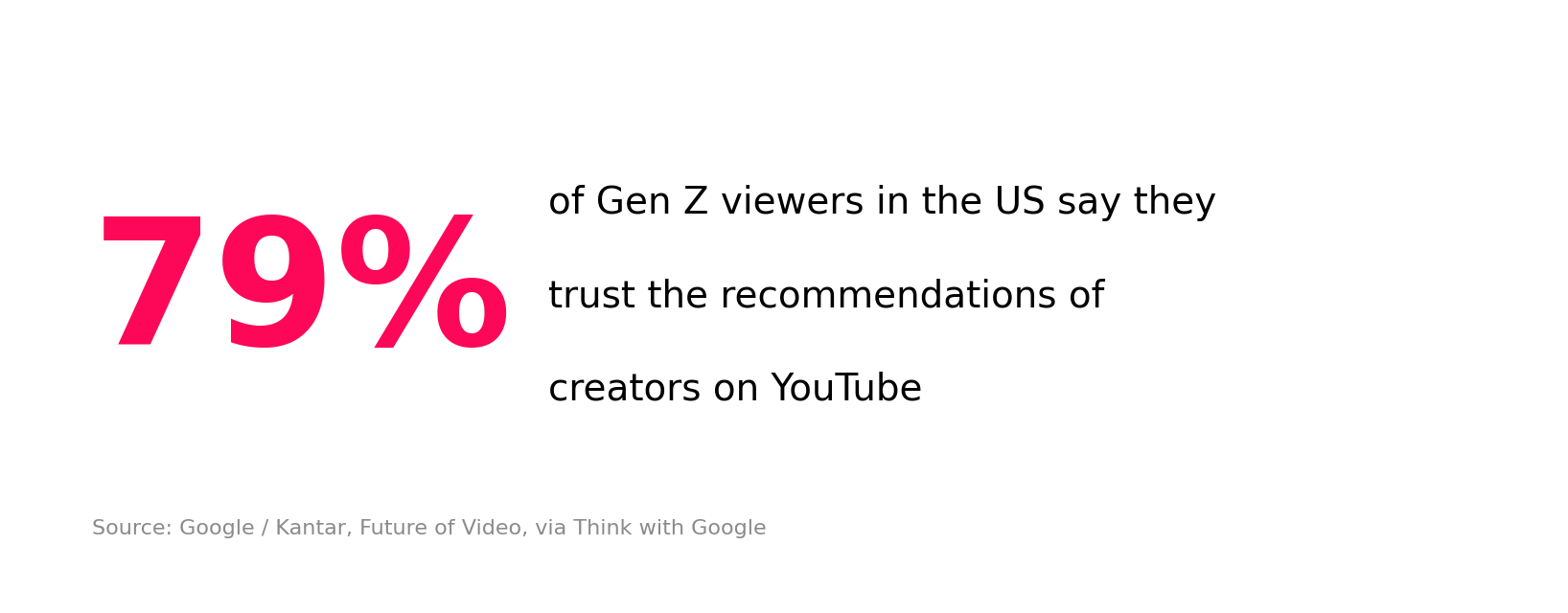
Trust is what converts. Source: Google / Kantar, via Think with Google.
Then there is the AI part
When the industry gathered at Cannes Lions this June, creators were the story, with more than 500 of them on the Croisette and one strategist describing a festival that had split into two, the advertiser one and the creator one. What ran underneath all of it, and got far less attention, was how AI is changing the way brands and creators find each other in the first place.
YouTube made the point plainly at the festival. Having already rebuilt its creator-matching platform around Google’s Gemini models earlier in the year, it used Cannes to roll out a set of AI tools that let brands spot trends and pull detailed audience data on creators before they commit. A brand can describe what it wants in plain language, something like US tech creators with high Gen Z retention, and the system surfaces the creators who genuinely fit, ranked on audience overlap and how their past partnerships actually performed. The manual work of trawling spreadsheets and leaning on agency contacts is being replaced by something far closer to a search engine for the right partner.
There is a deeper shift sitting behind this, and it is the part worth understanding. As more people start their product research by asking an AI rather than scrolling a feed or a results page, the brands that get recommended will increasingly be the ones the AI has seen creators talk about. When a trusted creator mentions your product, that mention does double duty, earning attention in the moment and then feeding the signal that shapes what the AI surfaces later, to people who never saw the original video. Discovery and trust start to compound, which makes who you partner with a longer-term decision than a single campaign ever was.
For a brand, the practical lesson is that creator selection is becoming a data problem as much as a creative one. The platforms are handing over the tools to match on real audience fit and to measure what each partnership actually returns, and the brands that learn to use them will pick better partners, prove the value more clearly, and stop guessing. The instinct and the relationships still matter, though they now sit on top of evidence rather than standing in for it.
What this means if you’re a brand
The temptation is to treat all of this as a bigger version of influencer marketing. Find someone with a large following, pay them to hold up your product, hope for the best. That approach is going to get more expensive and less effective at exactly the moment the tools are getting better.
Think back to the makeup chair. I was never effective because of how many people walked past my counter. I was effective because the ones who sat down believed me. A creator with the right audience does the same job, at a scale I could never have managed one face at a time, and the numbers bear that out, because smaller, well-matched creators consistently beat the mega-names on engagement while costing a fraction as much. Reach was never really the hard part of any of this, whereas earning genuine trust always was.
The mistake most brands make is looking at a creator in isolation, judging them on follower count and asking what that reach can do for a single campaign. The brands getting this right take a more holistic view. They look at whether a creator’s values and principles actually line up with the brand, because an audience can tell in seconds when a partnership is hollow, and the trust that made the creator worth approaching is the first thing to break when the fit is wrong.
It helps to understand what creators themselves now want, because it has changed, and the language has shifted with it. The word influencer always framed the person as a channel you rent for their reach, useful for a campaign and forgotten once it ended. Creator describes something different, someone who builds a genuine body of work and an audience that comes with it, and that is why the best of them are no longer interested in a quick two-week deal where they hold up a product and read a line. They want long-term partnerships where they become part of the creative team, where they get involved, where their beliefs and the brand’s beliefs genuinely meet. They want to help drive the change a brand is trying to make rather than simply work for it, and the brands that offer that kind of relationship get a far better version of the creator in return.
You can see the difference in the partnerships that have worked best. When the soda brand Poppi gave the creator Alix Earle an equity stake rather than a one-off fee, she had a genuine reason to talk about it, because she had started recommending Poppi in her college days simply because she liked it, and the brand turned that into ownership rather than a transaction. Her enthusiasm was real because her own success was now tied to theirs, and when PepsiCo acquired Poppi in 2025 for close to two billion dollars, that partnership was a meaningful part of the story. BodyArmor took a different but related route with the YouTube group Dude Perfect, moving past a standard sponsorship into co-creating a drink and a bottle together, treating the creators as collaborators on the product itself rather than a channel to advertise through.
So the question stops being who has the biggest audience and becomes who is the right partner, and how you build something with them that keeps working over time. It is a harder question to answer, and a far more useful one. The real lesson in all of it is that a thoughtful collaboration between a brand and a creator pays off over the long term rather than as a quick one-off sale, which is why the brands taking creators seriously as partners are the ones pulling ahead.
The shop floor moved. It’s inside a Reel now, and the person doing the selling is someone your customer already chose to follow, and the brands that work out how to do that properly, and at scale, are going to pull away from the ones still treating creators as a line on a media plan.