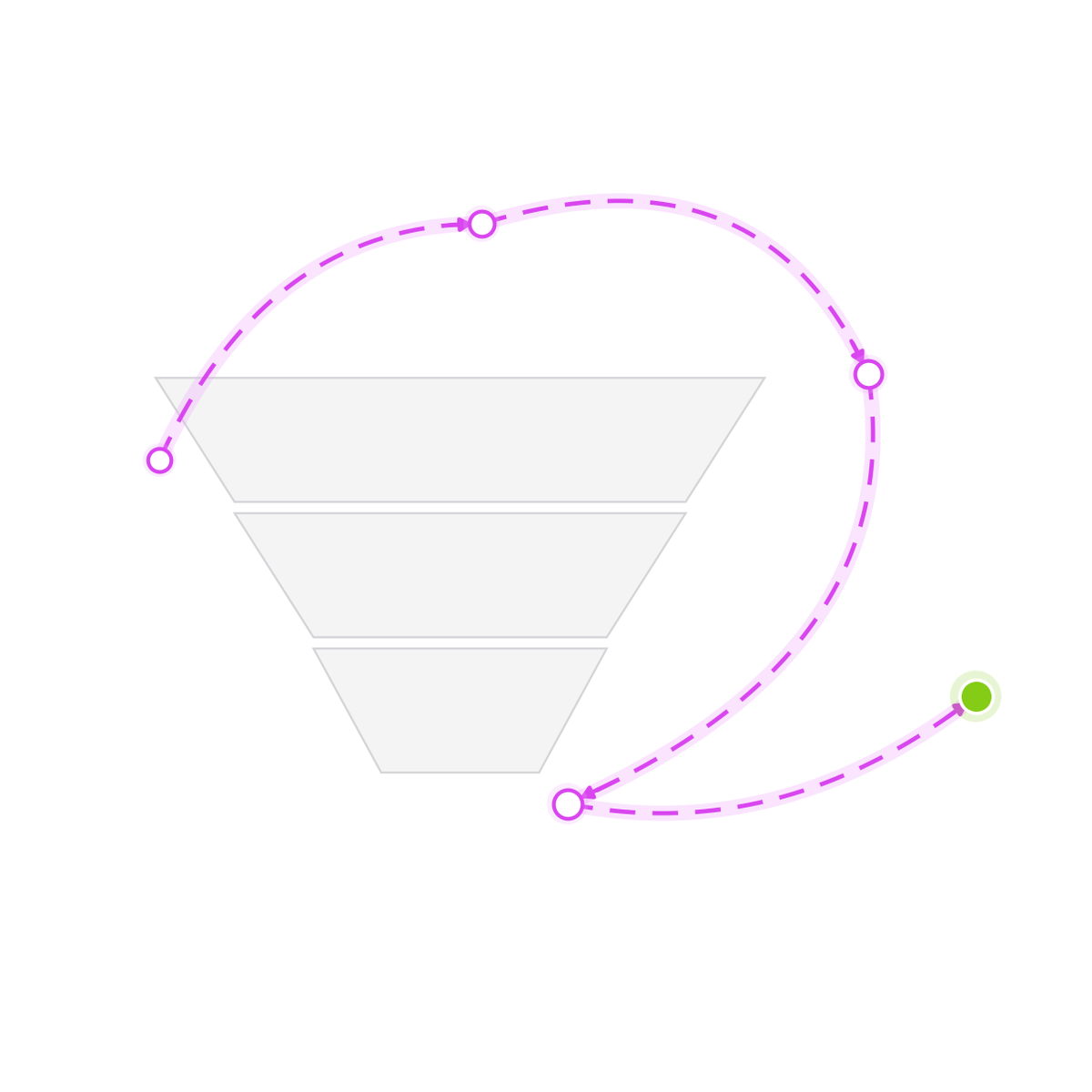
The marketing funnel is having its obituary written all over the industry press this year, and for once the eulogy has data behind it. Buyers now discover through AI answers, compare on Reddit and convert through branded search, in no order anyone can predict. Here is what the research actually shows, and how to build for a journey you can no longer see.
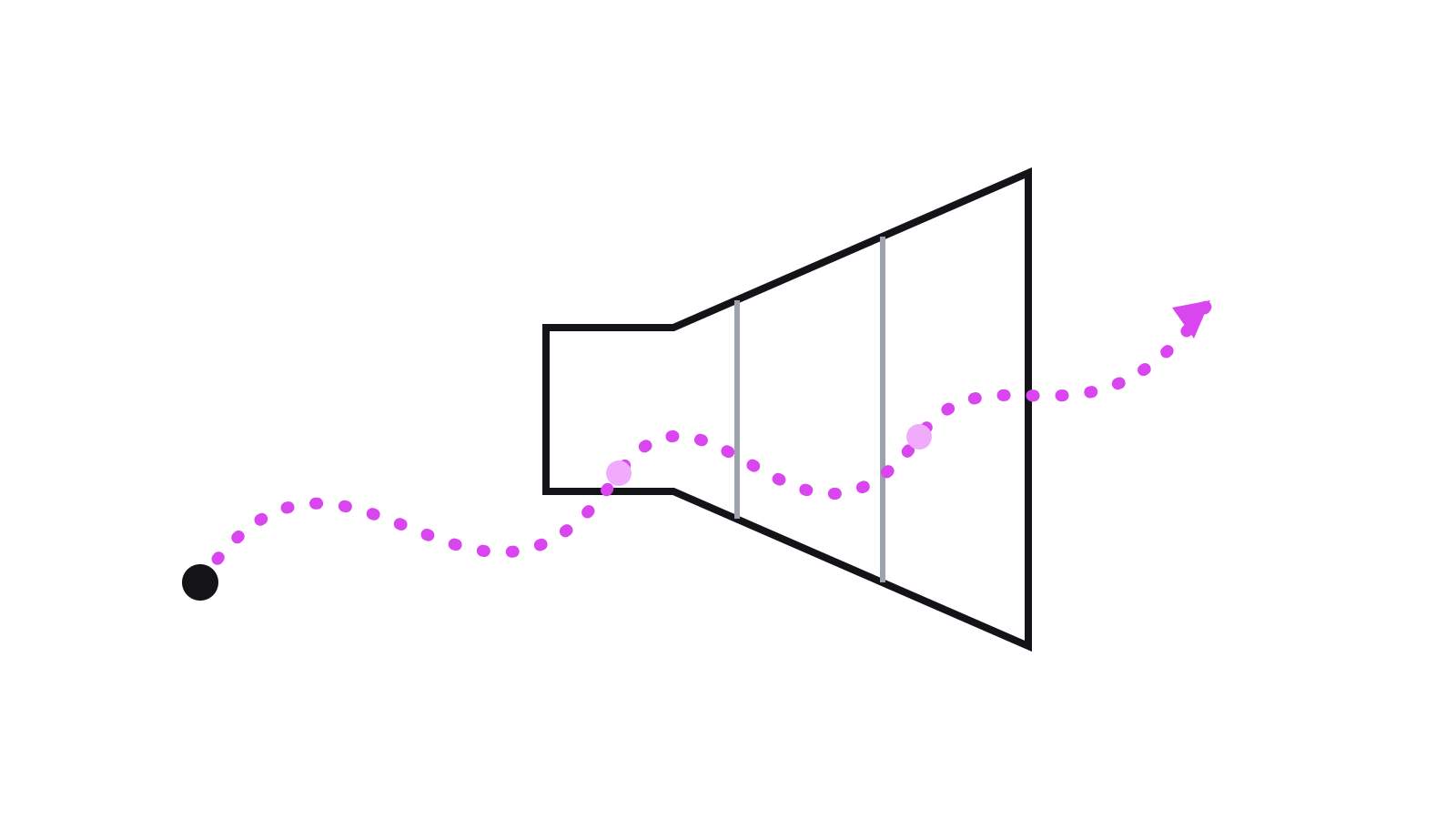
Watch someone buy anything reasonably expensive and try to map their journey against the funnel diagram in your marketing deck. It won't fit. It hasn't fit for years, but in 2026 the gap between the diagram and the behaviour has become impossible to politely ignore.
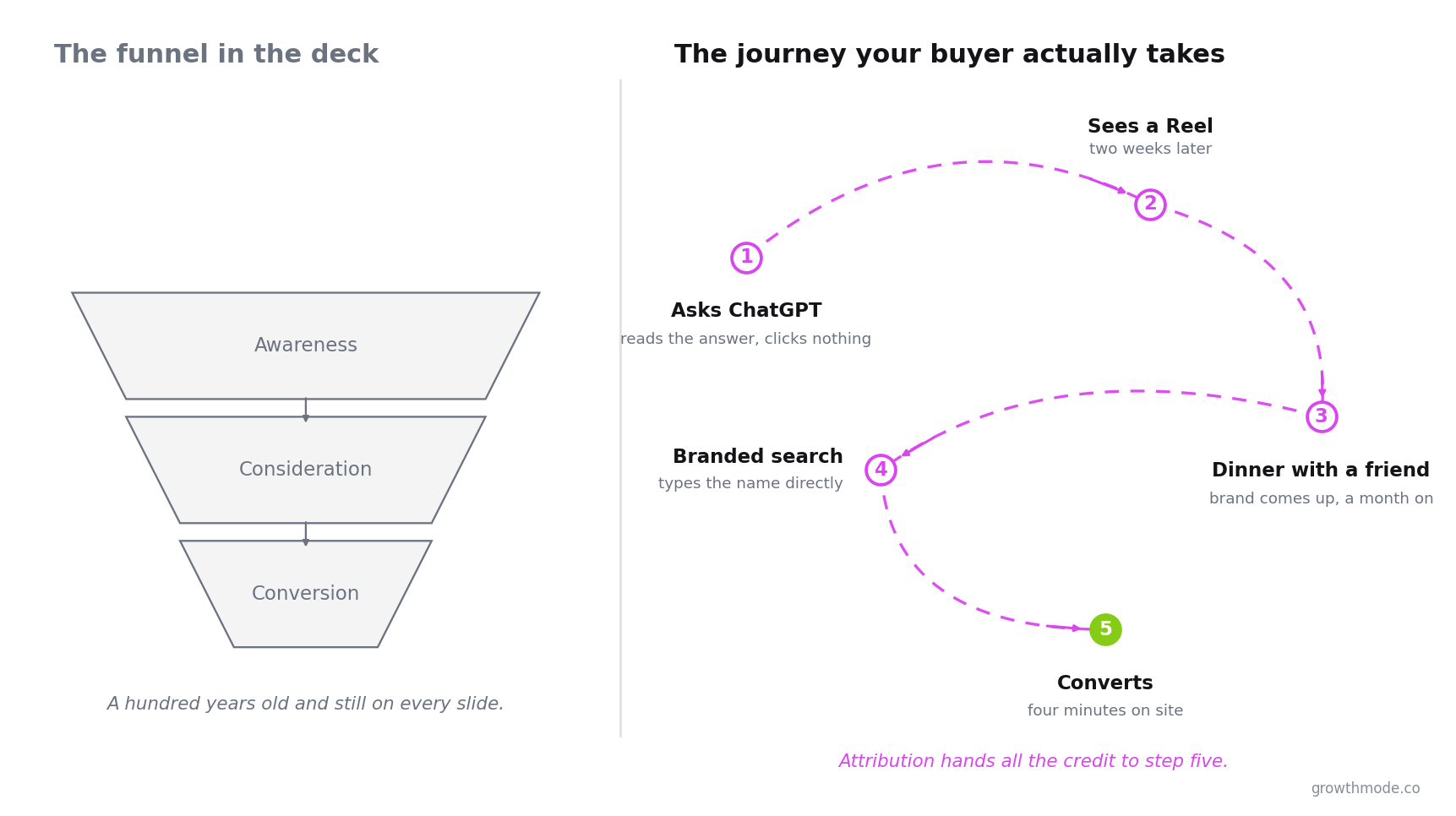
Here is a journey that will look familiar, assembled from patterns we see over and over. Someone asks ChatGPT a question, reads the answer, and never clicks anything. Two weeks later they see a Reel. A month after that, a friend mentions the brand at dinner. They then search the brand name directly, land on the site, and convert in four minutes. Ask most attribution setups which channel deserves the credit and they will point, with complete confidence, at the branded search. The door handle, in other words, gets credit for the party.
The diagram was always a simplification. Now it's a fiction
To be fair to the funnel, it earned its hundred-year run. Awareness, consideration, conversion is a perfectly sensible way to organise a marketing plan, and as a planning tool we still use it ourselves. The trouble starts when the planning tool gets mistaken for a description of how buyers behave - a distinction one 2026 benchmark study lands on almost word for word, concluding that the funnel works as a planning tool but fails as a causal model.
The reality is messier on two fronts, and the first is the one you can already see in your own analytics. The sequence has dissolved. Buyers now move through dozens of touchpoints in no fixed order, discovering via AI assistants, comparing in Reddit threads and converting through branded search. Meanwhile the entry point is disappearing from view altogether: 68% of Google searches now end without a click, up from around 45% a decade ago on Similarweb's clickstream data, because the answer arrived in an AI overview or a chatbot before your website ever entered the picture. Gartner has predicted that traditional search volume could fall by 25% as AI assistants absorb discovery, and whether or not that exact figure holds, the direction is not in dispute.
The second front is quieter, and to my mind more important. Research by Professor John Dawes at the Ehrenberg-Bass Institute - run with LinkedIn's B2B Institute, and worth reading in full - found that roughly 95% of your potential buyers are out of market at any given moment. They aren't moving down your funnel or sitting anywhere in it. They are getting on with their lives, and the only question that matters is whether they remember you exist when the buying moment eventually arrives.
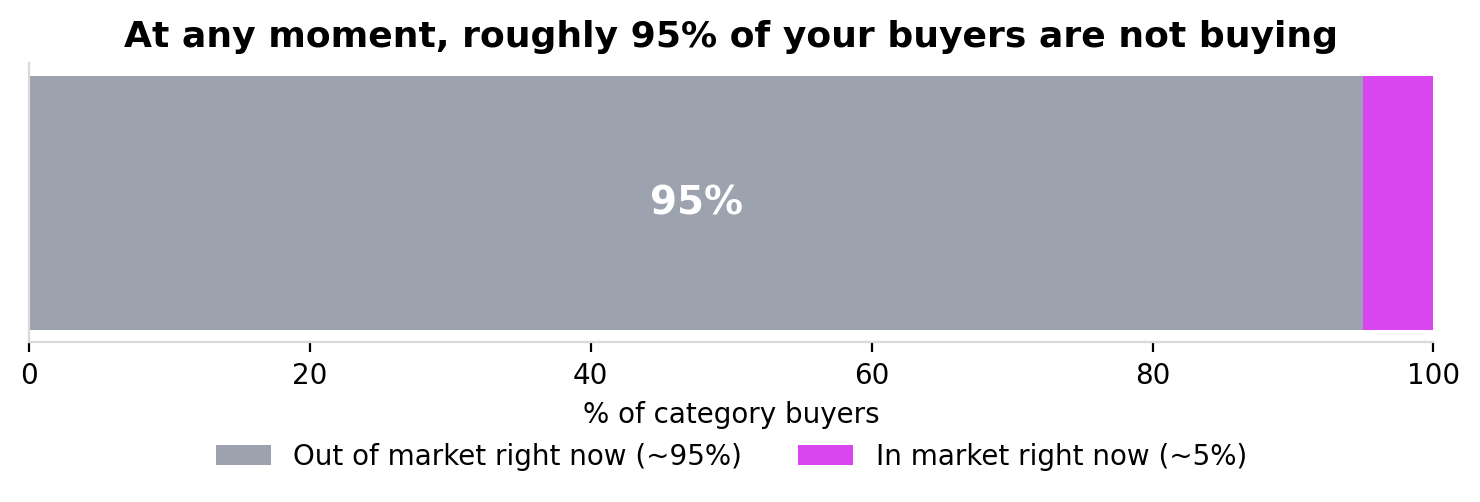
The 95:5 rule: only around one in twenty category buyers is in market at any given time. Source: Ehrenberg-Bass Institute / LinkedIn B2B Institute.
Put those two together and the strategic picture changes shape. The bulk of your marketing spend is really building memory - deposits against a purchase that will happen later, through a route you won't control and probably won't see.
What actually works when the path is invisible
The wrong response to all this is panic-buying more channels. We've watched brands react to the messy journey by scattering budget across every platform their competitors mention, on the logic that if buyers are everywhere, the brand should be too. What they end up with is a thin, forgettable presence in eight places instead of a strong one in three.
The better response - and this is the entire premise on which we built Growthmode - is to treat marketing as one connected system rather than a collection of channels. What that looks like in practice is less grand than it sounds.
- Start with your touchpoints, every one of which now has to be able to do every job. When you can't control the sequence, you can't assume the person seeing your ad has already met your brand, and you can't assume the person reading your blog is months from buying. Marketers working inside active accounts report the same shift, with paid media becoming an amplifier rather than the foundation while the foundation budget moves into assets that compound: content, email, partnerships, conversion improvements.
- Measurement has to grow up too, because when the journey runs through AI answers, group chats and dinner conversations, last-click attribution becomes a comforting lie. Incrementality tests and marketing-mix logic are doing the work last-click used to, alongside branded search growth and blended efficiency, with platform-reported ROAS demoted to one input rather than the verdict.
There is one genuinely fresh piece of good news on the visibility front. Google has just launched platform properties in Search Console, which for the first time shows which search terms lead people to your Instagram, TikTok, X and YouTube content on Google Search and Discover - a quiet admission from the world's biggest search engine that the journey now runs through social channels as much as through websites. It's rolling out gradually over the coming weeks, and wiring it in should be on your list the moment it reaches your account, because it makes a previously invisible leg of the journey measurable.
- The last piece is the least glamorous, and it is the one most businesses skip. Tracking, data, the plumbing between your channels - none of it feels like strategy, right up until you realise a system can only respond to signals it can see.
Do the detective work
Boston Consulting Group has built the most serious replacement for the funnel currently going, and it is worth reading properly rather than in summary. Its argument is that marketers have spent years force-fitting a complex array of touchpoints into a linear model which risks misallocating budget and getting the message wrong. In its place BCG proposes influence maps, built on the observation that modern journeys revolve around four behaviours - streaming, scrolling, searching and shopping - which refuse to stay in their allotted stages and instead run across the whole journey at once, overlapping and influencing several stages simultaneously. The vertical axis of the map is influence, meaning a brand's ability to meaningfully affect a decision, and because every journey produces a different map, one plan cannot serve them all.
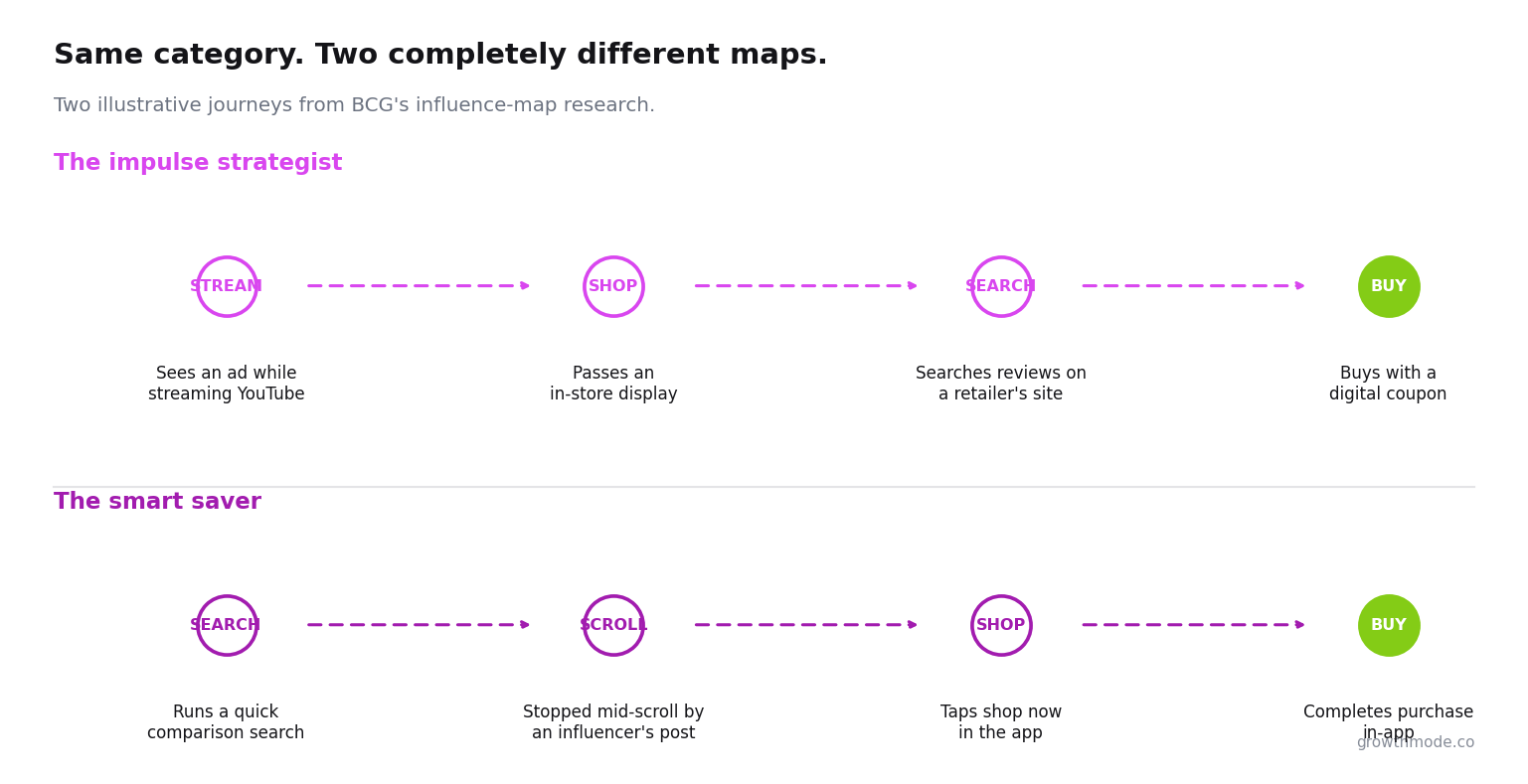
The impulse strategist sees an ad while streaming YouTube, encounters an in-store display, searches reviews on a retailer's site, and buys with a digital coupon. The smart saver starts with a quick comparison search, gets stopped mid-scroll by an influencer's post, taps shop now and completes the purchase in the app. Same category, entirely different maps, and a media plan built for one will underserve the other.
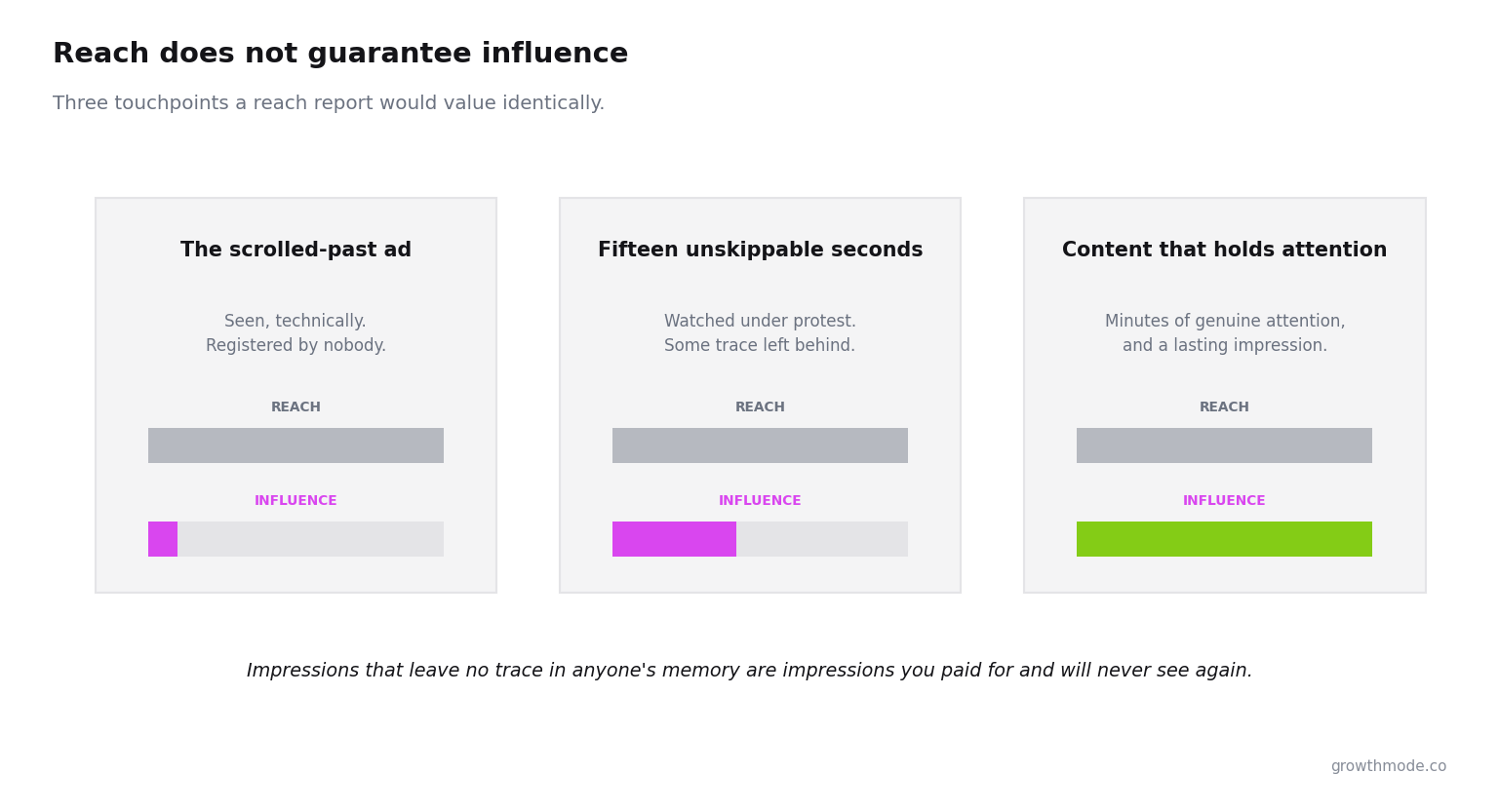
Then comes the sentence worth taping to a wall, which is that reach does not guarantee influence. BCG's example is a marketer valuing three things equally: an ad consumers scroll straight past, a fifteen-second unskippable video, and content that holds attention for minutes and leaves a lasting impression. On a reach report those look similar. In terms of influence they are nothing alike. Which is the 95:5 rule arriving from a completely different direction, because impressions that leave no trace in anyone's memory are impressions you paid for and will never see again.
Influence itself breaks down into three factors, and pulling them apart is where the detective work starts. There is attention, meaning whether a touchpoint holds anyone long enough to register at all. Relevance follows, which is whether the content actually meets a need the buyer has. And there is trust, meaning whether the platform and the voice carry any credibility with that person, which is precisely why creators have become one of the most effective sales channels in marketing: 79% of US Gen Z viewers say they trust what a YouTube creator recommends, and trust of that order moves decisions in a way an impression never will. BCG's point is that these should be assessed alongside reach when prioritising touchpoints, and that all touchpoints deserve the same scrutiny, whether they are earned like an influencer's endorsement, owned like your website, or built jointly through a partnership.
So the work stops being administrative and becomes investigative. Rather than asking which stage a touchpoint belongs to, you are asking who your buyers actually are, which journeys they take through your category, and which moments genuinely move them. BCG's recommended starting sequence is unglamorous and sound: run research to identify the top influence pathways for your category, build maps to understand how stream, scroll, search and shop actually function there, then redesign the plan to maximise the influence you can deliver across those channels. None of it is quick. All of it is cheaper than another year of buying reach nobody remembers.
Do that work and buy-ready stops being a slogan. A brand is buy-ready when the touchpoints that matter to a given pathway are all in decent shape at once, so that whenever a buyer crosses from the 95 into the 5, and you will not see the moment they do, the memory is already there.
The parts of the funnel worth keeping
To be clear, none of this is an argument for abandoning structure. BCG describes the influence map as a reimagining of the funnel rather than its execution, and Directive's 2026 analysis frames strong top-of-funnel work as building memory and trust with buyers who don't yet know they're buyers, rather than as a lead-harvesting exercise judged on immediate form fills. And if you're at the earlier end of the journey - trying to win your first customers rather than your next thousand - the fundamentals of finding and talking to buyers directly haven't changed much at all. We've written practical guides to exactly that: how to get your first 10 customers and how to get your first 1000 users.
For everyone else, the funnel survives as a checklist, a way of making sure you're present at every stage of a journey you no longer get to choreograph.
Making peace with that loss of control early is the harder half of the job. Think back to the journey at the top of this piece. Nobody designs those routes, nobody sees most of them, and they happen anyway. Spend as though memory is the asset, map the pathways your buyers actually take, and stop asking your attribution dashboard to tell you a story it was never equipped to know.